Why Finite Heritage Tells the Most Compelling Stories
A Rembrandt cannot be reprinted. A 1961 Pétrus cannot be re-vintaged. And a cask laid down in a Highland warehouse in 1982 cannot be conjured twice. In a world awash with abundance and replication, truly finite heritage occupies a category of its own — and it tells stories that resonate across generations.
The Mathematics of Scarcity
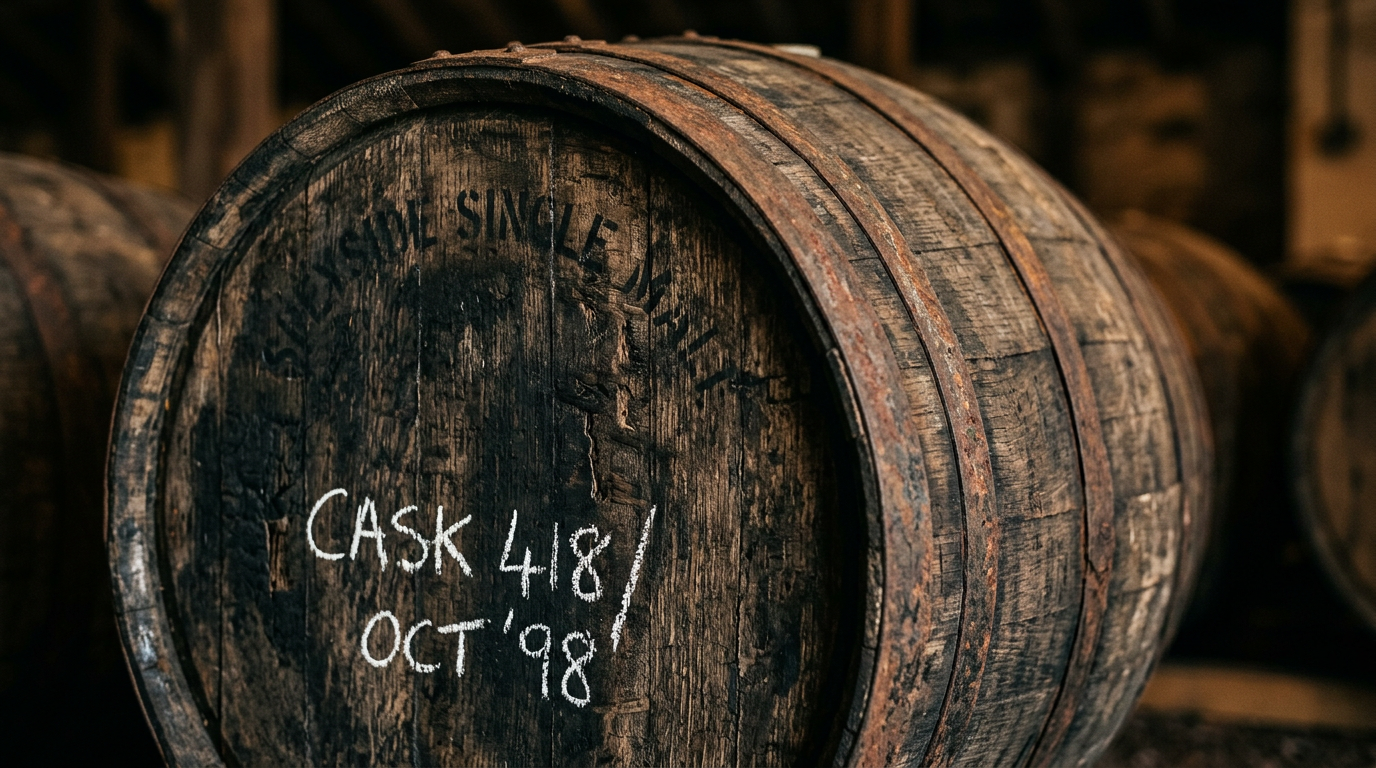
Consider the arithmetic of a whisky cask. From the moment spirit enters oak, two irreversible processes begin: maturation and evaporation. The angel's share — that poetic term for the spirit lost to the Scottish air — reduces volume by approximately one to two percent each year. A cask filled in 2000 has already lost a meaningful portion of its volume. It can never be replenished.
Meanwhile, global consumption of heritage spirits continues to rise. Scotch whisky exports exceeded £6 billion in 2025, with demand from emerging collectors showing no sign of plateauing. The result is a structural imbalance: demand grows while supply — quite literally — evaporates.
Stories That Compound
The most compelling thing about finite heritage is that its stories compound with time. A cask does not merely age — it accumulates provenance. Each year in a Scottish warehouse adds another chapter: the seasons it endured, the warehouse it occupied, the craftspeople who tended it. This accumulating narrative is what draws careful collectors.
The Golden Casks Position
We do not sell whisky. We hold custody of finite, named, maturing heritage casks whose stories grow richer with every passing year. Each cask in our cellar represents a convergence of craft, time, and scarcity that cannot be manufactured or accelerated. That is why we believe heritage casks belong in the quiet collections of those who notice such things.
An allocation built around what you actually want to own.
Each conversation begins the same way — with a long answer to a short question. Tell us what you are exploring, and we will tell you what is in the cellar.
Open a Private Enquiry